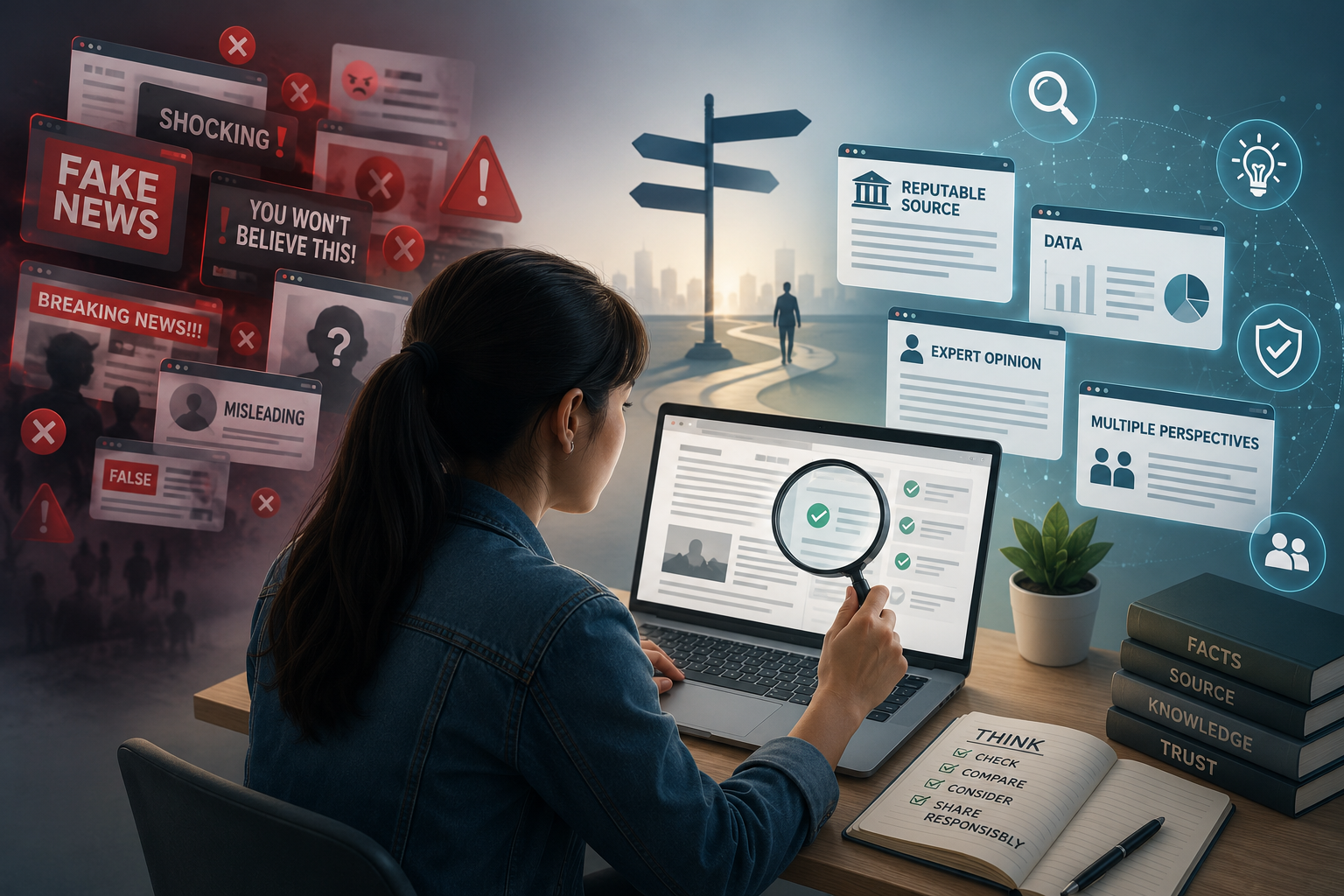
The twenty-first century has witnessed an unprecedented growth in information and communication technologies. The internet, social media platforms, smartphones, and digital networks have transformed the way people create, access, share, and consume information. Today, information is available at the touch of a button, enabling individuals to connect with people, institutions, and knowledge resources across the globe. While this digital revolution has created numerous opportunities for education, research, communication, and social development, it has also introduced significant challenges, particularly the spread of misinformation.
Misinformation refers to false, inaccurate, or misleading information that is shared without proper verification. In many cases, misinformation spreads rapidly through social media platforms, messaging applications, websites, blogs, and digital communities. The speed and reach of digital communication have made it increasingly difficult for individuals to distinguish between reliable information and misleading content. As a result, misinformation can influence public opinion, affect decision-making, create confusion, and even threaten social harmony.
In this context, digital literacy has emerged as an essential life skill. Digital literacy is not merely the ability to use computers or access the internet. It encompasses a broad range of competencies, including the ability to locate, evaluate, analyse, create, and communicate information effectively and responsibly in digital environments. Digital literacy empowers individuals to navigate the complex information landscape and make informed decisions based on credible information.
Information communication plays an equally important role in the digital age. Effective communication ensures that information reaches the intended audience accurately, clearly, and ethically. In an era where information spreads rapidly across digital platforms, responsible communication practices are crucial for preventing the dissemination of misinformation.
This lecture explores the concepts of digital literacy and information communication, examines the challenges posed by misinformation, highlights the importance of critical thinking and information evaluation, and discusses strategies for promoting a digitally informed society.- Teacher: Dr. Manoj Kumar Acharya