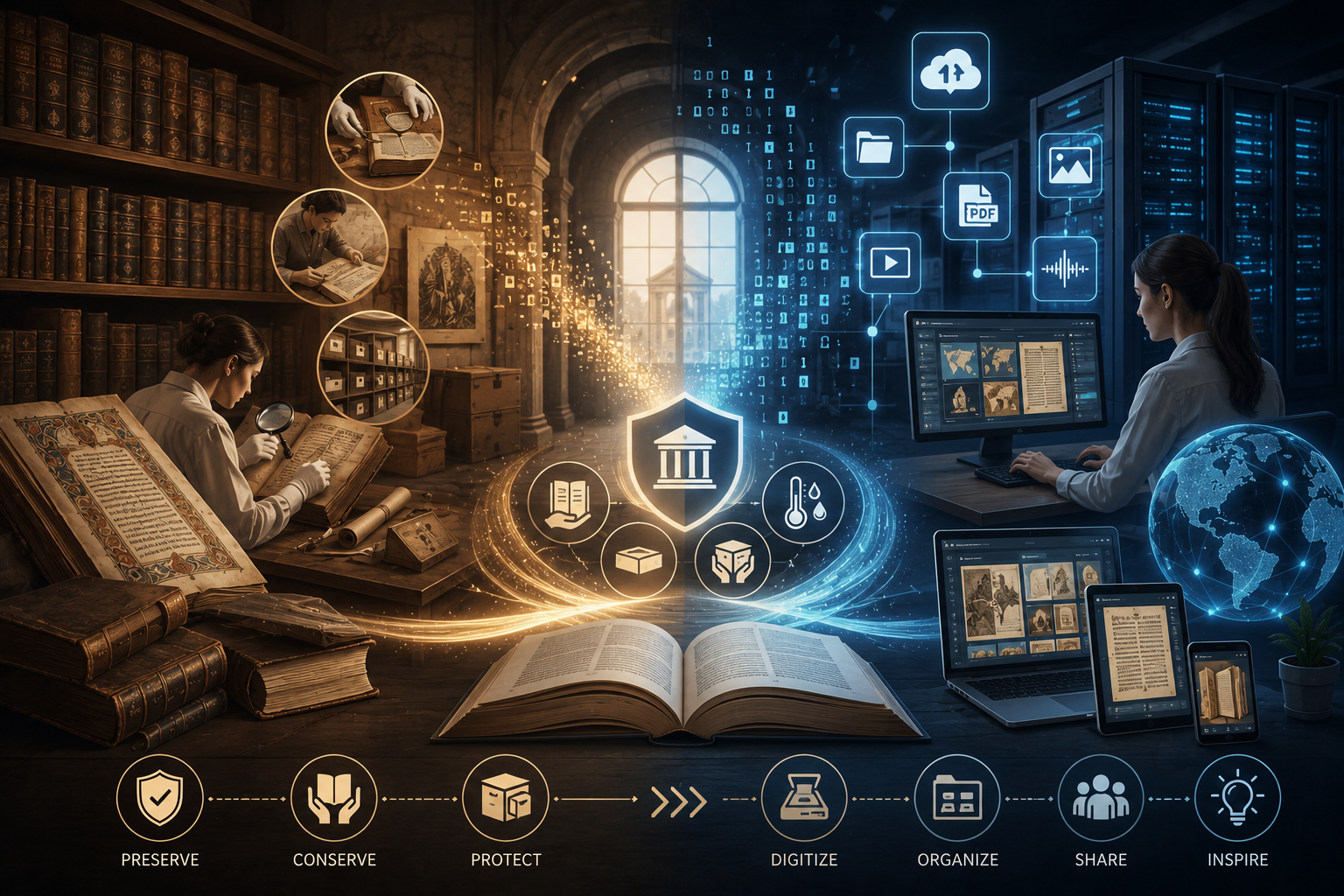
Libraries have long been recognized as guardians of human knowledge, culture, history, and intellectual heritage. For centuries, they have collected, organized, preserved, and provided access to valuable information resources for present and future generations. From ancient manuscripts and rare books to modern digital collections, libraries play a vital role in safeguarding society's collective memory.
Preservation has always been one of the fundamental responsibilities of libraries. The primary objective of preservation is to ensure that information resources remain accessible, usable, and authentic over time. Traditionally, preservation efforts focused on protecting physical materials such as manuscripts, books, maps, photographs, newspapers, and archival documents from deterioration caused by environmental factors, handling, pests, and aging. However, the rapid growth of digital technologies has transformed both the nature of information resources and the methods used to preserve them.
Today, libraries manage a wide variety of digital assets, including e-books, electronic journals, institutional repositories, research datasets, digital archives, multimedia collections, websites, and born-digital documents. These resources present new opportunities for expanding access to knowledge, but they also introduce complex preservation challenges. Unlike physical materials that deteriorate gradually, digital assets may become inaccessible suddenly due to technological obsolescence, hardware failure, software incompatibility, cyber threats, or data corruption.
As libraries transition from preserving rare books to managing extensive digital collections, preservation strategies must evolve accordingly. Modern preservation requires a combination of traditional conservation techniques, digital technologies, policy frameworks, and collaborative efforts to ensure long-term access to both physical and digital heritage.
This lecture explores the evolution of library preservation, the importance of preserving rare books and digital assets, emerging preservation technologies, challenges faced by libraries, and the future of preservation in the digital age.
- Teacher: CHINMAY KUMAR DAS